



Discover how Individualised Therapies for Special Needs Children can support communication, confidence, motor skills, independence, and overall development at Gateway International School Lahore.
Every child learns, communicates, and develops in a unique way. While some children may progress naturally through everyday classroom experiences, others may need additional support to develop particular skills. Individualised Therapies for Special Needs Children can provide that additional support by addressing a child’s specific needs, abilities, and developmental goals.
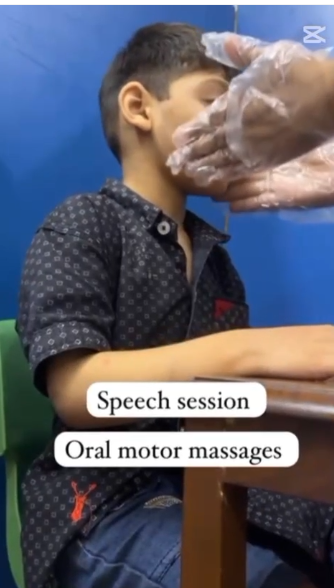
At Gateway International School Lahore, the Inclusive School provides children with opportunities to learn through educational and therapeutic experiences designed around their individual requirements. A video showing different therapies being carried out with special needs children highlights an important principle of inclusive education: supporting every child means understanding what each child needs to progress.
Every Child Has Different Needs
Children with special educational needs are not a single, identical group. Their strengths, challenges, communication styles, learning abilities, and developmental needs can vary considerably.
One child may need greater support with communication, while another may benefit from activities that focus on motor coordination, sensory responses, attention, or functional skills.
This is why Individualised Therapies for Special Needs Children are important. Rather than expecting every child to follow exactly the same pathway, individualised support allows activities to be adapted according to the child’s needs and abilities.
Individualised Support Makes Learning More Meaningful
Children are more likely to engage positively when activities are appropriate to their developmental level and provide achievable challenges.
Therapeutic activities can be adjusted in terms of difficulty, duration, level of assistance, repetition, and method of presentation. This allows children to practise skills at a pace that is appropriate for them.
For some children, completing a task independently may be the goal. For another child, participating with support may represent meaningful progress.
The focus is therefore not on comparing one child with another, but on helping each child move forward from their own starting point.
Supporting Communication and Expression
Communication plays an important role in learning, relationships, and independence. Some children may require additional support to develop speech and language skills, understand instructions, express their needs, or communicate through alternative methods.
Individualised therapeutic activities can provide opportunities for children to practise communication in a structured and supportive setting.
A simple response, gesture, word, choice, or attempt to interact can be meaningful. When children are given appropriate opportunities to communicate, they can gradually become more confident in expressing themselves.
Developing Motor and Functional Abilities
Some special needs children may benefit from additional opportunities to develop movement, coordination, hand skills, balance, or other functional abilities.
Therapeutic sessions can provide structured practice that complements classroom learning.
Individualised Therapies for Special Needs Children can help activities be adapted according to a child’s current abilities. A child may initially need physical guidance or additional support, while gradually becoming more capable of completing parts of an activity independently.
These skills can contribute to participation in classroom routines and everyday tasks.
Building Confidence Through Small Achievements
Progress does not always look the same for every child. A small achievement can be highly meaningful when it represents a new ability or an important step towards independence.
Completing a task, following an instruction, maintaining attention, making a choice, communicating a need, or attempting something new can all represent progress.
Individualised support allows educators and therapists to recognise these steps and provide encouragement accordingly.
When children experience success at an appropriate level, they can develop greater confidence in their own abilities and become more willing to participate in new experiences.
Encouraging Independence
One of the important aims of special education and therapeutic support is to help children become increasingly independent according to their individual potential.
Therapeutic activities can provide opportunities to practise skills that children may eventually use in their daily routines.
This might involve following a sequence of actions, making choices, handling materials, communicating preferences, or participating more independently in an activity.
With consistent support and appropriate opportunities for practice, children can gradually develop greater confidence in managing tasks around them.
A Child-Centred Approach to Development
A child-centred approach recognises that progress cannot always be measured through the same standards for every child.
Individualised Therapies for Special Needs Children focus on the child as an individual. Their abilities, needs, interests, developmental stage, and progress can all be considered when planning appropriate support.
This approach also allows adults working with children to recognise strengths rather than focusing only on difficulties.
When a child’s abilities are understood and encouraged, therapy becomes more than a set of exercises. It becomes an opportunity to help the child participate, communicate, explore, and develop.
The Role of Therapies Within Inclusive Education
Therapy and education can complement each other. While classroom experiences provide opportunities for learning and social interaction, therapeutic support can focus on particular developmental or functional needs.
At Gateway International School Lahore, such support contributes to the broader goal of creating an inclusive educational environment.
The different therapeutic activities shown in the video reflect an approach that recognises that children may require different kinds of support to participate meaningfully in their educational journey.
The goal is not simply to help children complete activities. It is to help them develop skills that can contribute to communication, participation, confidence, and greater independence.
Supporting Potential, Not Comparing Children
Every child deserves opportunities to learn and develop in an environment where their individual needs are understood.
Individualised Therapies for Special Needs Children provide a way of offering targeted support while respecting the fact that every child’s journey is different.
At Gateway International School Lahore, the therapeutic experiences provided through the Inclusive School can become valuable opportunities for children to practise skills, build confidence, and discover what they can achieve.
When education and therapeutic support work together, children can receive a more holistic learning experience that recognises both their needs and their potential.
Different needs, different pathways, one shared goal: helping every child thrive
Come Visit Us Today! 🌟💖 Meet our dedicated staff and supportive management.
Contact Us: 0323-4197845, 042-32350758
Follow Us on Social Media: Click here to join our Facebook page, Follow us on Instagram Or Here to read our Blog